

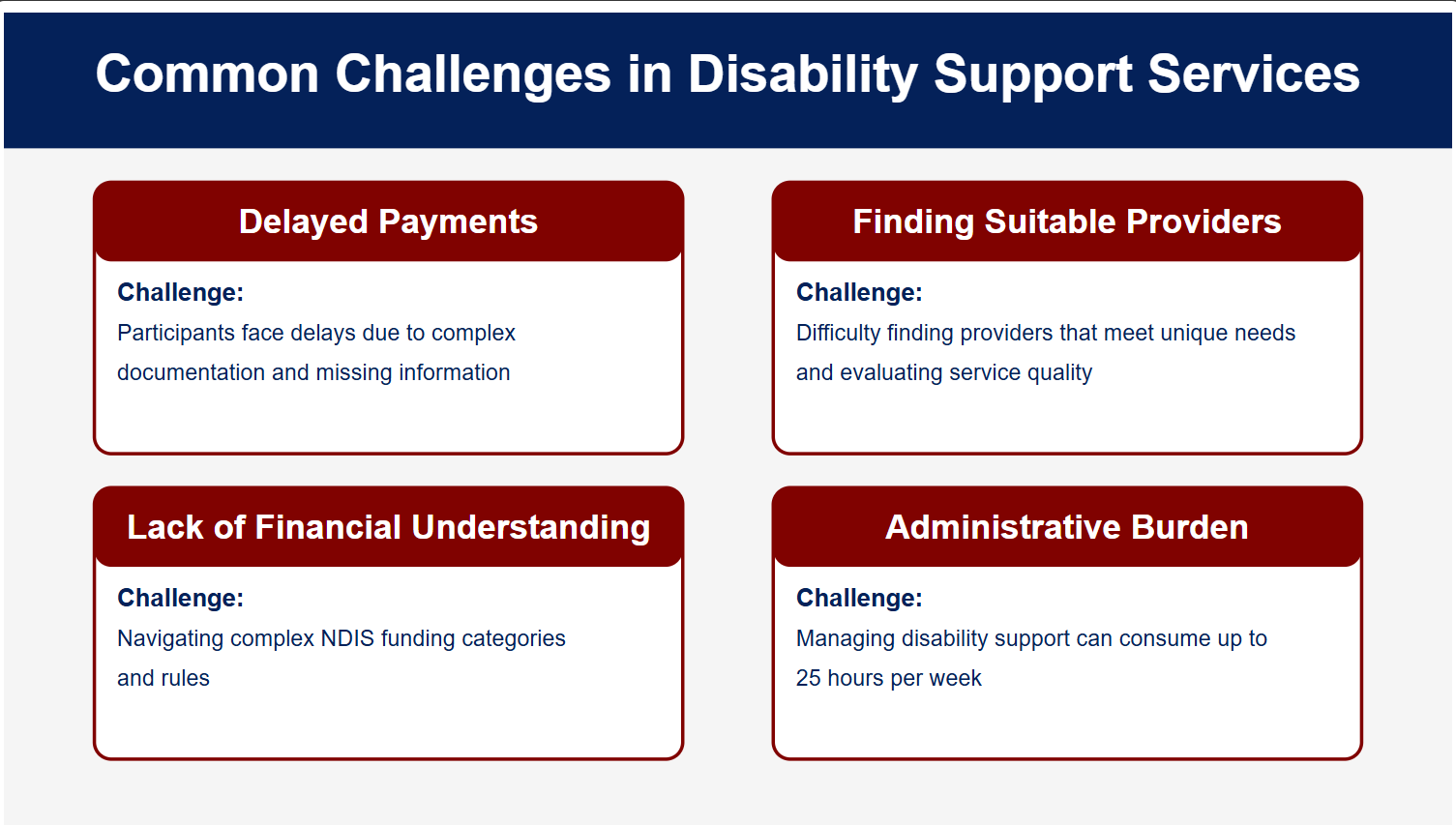
The NDIS gives participants more control over their supports than most previous systems ever did. But that control comes with complexity, and for many people, the relationship with their provider is where that complexity shows up most clearly. Support doesn’t always go smoothly, and knowing what problems to expect, and why they happen, makes it easier to handle them when they do.
Finding the Right Provider Takes Longer Than Expected
Most participants underestimate how much time goes into finding a provider that genuinely fits. The NDIS provider finder lists thousands of options, but a name on a register tells you very little about availability, communication style, wait times, or whether someone has experience with your specific disability or support needs.
Families and participants often spend weeks contacting providers, only to find:
- Long waitlists, sometimes months out
- Services that don’t cover their area or suburb
- Providers who are registered for the support category but have limited actual experience in it
- Poor responsiveness during the initial enquiry stage
The enquiry stage itself is often a signal. If a provider is difficult to reach or slow to respond before you’ve even started, that pattern tends to continue once supports are underway.
Inconsistency in Support Workers
One of the most common frustrations participants raise is the lack of consistency in who shows up to deliver their support. This is particularly significant for people who need personal care, have communication support needs, or for whom trust and familiarity genuinely affect the quality of the support being delivered.
Providers often cite rostering constraints, staff turnover, and sick leave as reasons for sending different workers. These are real challenges in the sector. But the impact on participants is real too. When someone new arrives each time, the participant often ends up re-explaining their needs, preferences, and routines repeatedly, which is both exhausting and an inefficient use of funded support time.
Before committing to a provider, it’s worth asking directly: how do they handle consistency, what happens when a regular worker is unavailable, and will you have any say in who supports you?
Communication That Falls Short
Slow responses, unclear invoices, no updates when things change, being passed between different staff members with no one taking ownership: communication problems are one of the top reasons participants end their arrangements with providers.
Some of this comes down to provider size. Larger organisations often have more administrative layers, which means your feedback or concern has to travel through several people before anything actually changes. Smaller providers can be more responsive but may have fewer backup resources when staff are unavailable.
What good communication looks like in practice:
- Clear points of contact for different issues (billing vs support delivery, for example)
- Timely responses to questions, ideally within one to two business days
- Proactive notice if a session needs to change or a worker is unavailable
- Transparent invoicing that matches what was agreed in the service agreement
If a provider you’re considering can’t tell you clearly how their communication works, that’s worth taking seriously.
Unexpected Charges and Billing Confusion
Billing surprises are more common than they should be. Participants receive invoices with charges they didn’t expect, rates that don’t match what was discussed, or cancellation fees applied in situations where they felt the cancellation was justified.
Some specific billing issues that come up regularly:
- Travel charges that weren’t disclosed upfront
- Cancellation fees applied even when adequate notice was given
- Session times billed at a higher rate than the service agreement specifies
- Charges for report writing or admin tasks without prior discussion
The best protection against this is a detailed service agreement reviewed carefully before signing, and a habit of checking invoices against that agreement rather than approving them automatically. If something doesn’t add up, raise it promptly. Most billing issues are easier to resolve when they’re flagged quickly rather than after several months have passed.
Support That Doesn’t Align With Your Goals
NDIS funding is tied to your goals and what the scheme considers reasonable and necessary to achieve them. But it’s not unusual for participants to feel that the support they’re receiving is just going through the motions rather than actually helping them move toward anything meaningful.
This can happen when:
- Goals are set vaguely and never revisited
- Support workers complete tasks without understanding the broader purpose behind them
- There’s no regular check-in between the participant and the provider about whether the support is working
- Providers focus on task completion rather than building capacity or independence where that’s the goal
A good NDIS provider in Melbourne will regularly connect the day-to-day support being delivered back to the participant’s actual goals, not just the line items in the service agreement.
Difficulty Changing or Leaving a Provider
Participants have the right to change providers. The NDIS is built on that principle. But in practice, switching can be harder than expected.
Challenges people encounter when trying to leave:
- Notice periods that leave them without support temporarily while the new provider gets set up
- Providers who are slow to finalise end-of-service paperwork or transfer relevant records
- Overlap periods where funding is tied up with the outgoing provider and not yet accessible for the new one
- Emotional difficulty, especially in long-term arrangements where a real relationship has formed
Planning ahead helps. If you’re thinking about changing providers, start the process before things become urgent. Speak to your plan manager or support coordinator early, understand your notice obligations under the current service agreement, and make sure the incoming provider has confirmed availability before you give notice.
When to Involve the NDIS Commission
Most issues can be resolved directly with the provider through open conversation or a formal complaint through their internal process. But if that doesn’t get a result, the NDIS Quality and Safeguards Commission is the appropriate escalation point.
You can contact the Commission when:
- A provider is not delivering what was agreed and won’t address it
- You believe you’ve been charged incorrectly and the provider won’t correct it
- You have concerns about the safety or quality of supports being delivered
- Your rights as a participant are not being respected
The Commission takes complaints from participants, their families, and advocates. You don’t need to resolve things on your own if the issue is serious.
Working Through Problems Rather Than Around Them
The most effective participants aren’t the ones who never have problems. They’re the ones who address issues directly, know their rights, and don’t wait until things have completely broken down to raise a concern. Building that habit early, with every provider relationship, makes the whole experience of navigating the NDIS considerably smoother.
