

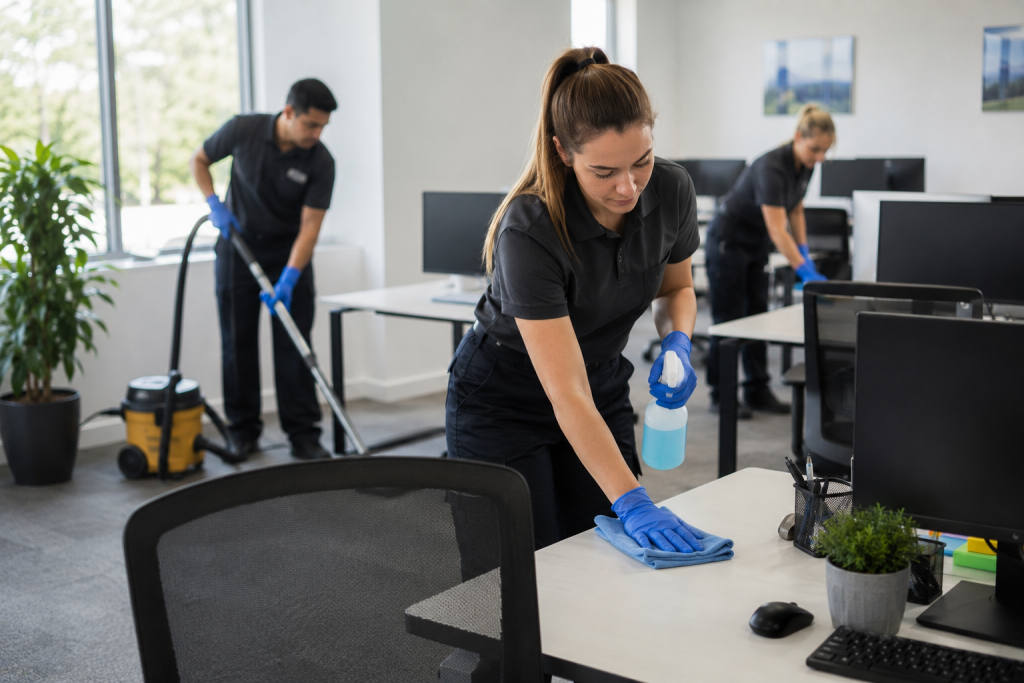
Had a conversation with an old coworker last month; she manages a small insurance office off Bond Street, and she was telling me how her team’s output noticeably picked up after they switched cleaning providers. Not because anyone got a pep talk or a new productivity app got rolled out, nothing like that. Just, the place stopped feeling like it needed to be tolerated and started feeling like somewhere people actually didn’t mind spending their day. She said she almost didn’t believe it herself until she looked at their numbers over a few months, and the pattern was pretty obvious.
It’s one of those things that sounds a little too simple to be true, cleaning affecting productivity, but once you actually think through why, it makes a lot more sense than it seems like it should.
Why Office Hygiene Matters
People tend to separate hygiene and productivity into two totally different categories in their heads, like one’s about health and the other’s about output, and they don’t really touch. In reality they’re way more tangled together than most managers give credit for.
Think about the physical experience of sitting at a desk that’s a little dusty, using a keyboard that hasn’t been wiped in who knows how long, and walking past a kitchen area that smells vaguely off. None of that is dramatic on its own. But it’s a low-grade distraction running in the background all day, and low-grade distractions add up over eight hours in ways people don’t consciously register but definitely feel by the time they’re heading home exhausted for reasons they can’t quite pin down.
There’s also a signaling piece to this. When an office looks and feels neglected, it quietly tells employees that the details don’t matter much around here, and people tend to mirror that attitude in their own work without even meaning to. Nobody sits down and consciously decides to care less because the carpet’s stained, but the general atmosphere of a place shapes behavior more than most people want to admit.
Reducing Germs and Employee Sick Days
This part’s a bit more measurable than the atmosphere stuff, and honestly it’s probably the biggest practical reason office hygiene matters at all. Shared surfaces, keyboards, phones, door handles, and the coffee maker everyone touches at least once a day accumulate bacteria and viruses at a rate that would probably surprise most people if they actually saw the numbers.
Regular tidying, wiping a desk down here and there, doesn’t really solve this. Actual disinfection targeting those high touch points specifically is a different job entirely, and it’s the piece that most offices skip because it’s less visible than, say, vacuuming or emptying bins. You can’t really tell the difference between a surface that’s been properly disinfected and one that just got wiped with a dry cloth, not by looking at it anyway, which is exactly why a lot of cleaning arrangements quietly cut corners here without anyone noticing until flu season hits.
Fewer sick days aren’t just good for the individual employee, obviously. In a small office, one or two people out for a week can genuinely slow everything down; meetings get pushed, deadlines slip a little, and everyone else absorbs extra work they weren’t expecting to. Keeping germs down through proper cleaning isn’t glamorous, but it’s one of those unglamorous things that actually moves the needle on how smoothly a business runs week to week.
Creating a Better Experience for Clients
Employees aren’t the only ones affected by how an office feels, obviously. Anyone walking through for a meeting, a delivery, or an interview picks up on the state of the space almost instantly, usually within the first minute of being there, and that first impression colors how the rest of the interaction goes, whether people realize it or not.
A dusty reception area or a washroom that hasn’t been checked in a while sends a message about how a business handles details generally, even if that’s not remotely fair to whatever’s actually happening behind the scenes. On the other hand, a space that’s clearly well kept signals a kind of competence before a single word gets exchanged, and that matters a lot for businesses trying to win over new clients or convince a strong candidate to accept an offer over some competitor down the street.
It’s a small thing individually, but it stacks the deck slightly in your favor before the actual pitch or interview even starts, and in competitive markets, those small advantages add up more than people expect.
Daily vs Weekly Office Cleaning
One question that comes up constantly is how often an office actually needs cleaning, and the honest answer depends a lot on how the space gets used day to day. High-traffic areas, entryways, kitchens, and washrooms generally need daily attention no matter the size of the office, since these spots accumulate mess and germs fast regardless of how many people are actually working there.
Desk areas and less frequently used spaces can often get by with a few visits a week, supplemented by a more thorough deep clean monthly for things like carpets or windows that don’t need constant attention. The mistake some offices make is applying one blanket schedule across everything, treating a washroom the same as a quiet corner office nobody really uses when really these spaces have completely different needs.
A cleaning provider that actually walks through a space and asks about how it’s used tends to build a much more sensible schedule than one that just applies a standard package regardless of the specific office layout or how many people are actually moving through different areas throughout the day.
Signs Your Office Needs Professional Cleaning
A few signals tend to show up before things get bad enough that everyone notices at once. Persistent odors that don’t really go away even right after a supposed cleaning. Dust that seems to build back up faster than it reasonably should. Employees mentioning the same complaint more than once, since people generally don’t repeat something unless it’s actually bothering them enough to say it twice.
Another sign worth watching for is increased sick time without an obvious cause, especially if it seems to cluster around certain seasons or spike unpredictably. It’s easy to chalk this up to “just going around” without connecting it back to whether high-touch surfaces are actually being disinfected properly or just wiped in passing.
Catching these signs early and adjusting the cleaning approach, whether that means more frequent visits or just a more thorough provider, tends to be a lot less disruptive than waiting until the office visibly feels run down to everyone walking through it, at which point fixing the impression takes longer than fixing the actual cleanliness would have.
What a Good Cleaning Routine Actually Looks Like Behind the Scenes
Worth breaking down what a solid cleaning routine actually covers instead of just gesturing vaguely at professional cleaning like it’s one uniform thing. General maintenance covers the obvious stuff, desks, common areas, and trash removal, done consistently rather than whenever someone remembers to schedule it. Washroom sanitation deserves more attention than a lot of contracts actually give it, since this is usually where hygiene failures become obvious fastest to anyone who notices.
Floor care matters too, whatever form that takes for a given space, from carpet vacuuming to hardwood polishing to tile mopping, tailored to the actual flooring rather than one generic approach applied everywhere. And high-touch disinfection rounds it out: door handles, light switches, shared equipment, the stuff that spreads illness quickest when it gets skipped or rushed through.
A lesser provider might only really nail the first item on that list and call it done. A better one treats all of these as genuinely non-negotiable parts of the job rather than optional extras tacked on for an upcharge.
Why Employee Feedback Matters Here
One thing businesses in Oshawa sometimes overlook is just asking staff directly what’s bothering them about the space. Management often assumes they know what needs fixing, but the people actually sitting at those desks all day usually have a clearer picture of where things are falling short, whether that’s a washroom that never quite feels clean or a break room fridge nobody wants to open.
A quick informal check in every so often, even just a casual question during a team meeting, can surface issues that would otherwise go unaddressed for months. Businesses that actually act on that feedback tend to see a noticeably better response from staff than ones that let complaints pile up quietly in the background without anyone ever following up on them.
Conclusion
It’s easy to treat office cleaning as background noise, something that happens after hours and rarely gets a second thought from anyone actually running the business. But the effects touch employee focus, sick days, client impressions, and the overall rhythm of how smoothly a workplace runs day to day in ways that are honestly hard to separate once you actually start paying attention to the pattern, the way my old coworker eventually did.
For businesses in the area looking into office cleaning services in Oshawa, the honest takeaway is that this isn’t really an optional expense so much as a quiet investment in how well the whole operation functions. Sometimes the biggest productivity fix isn’t a new tool or a policy change; it’s just making sure the space people spend eight hours a day in is actually being looked after properly.
