

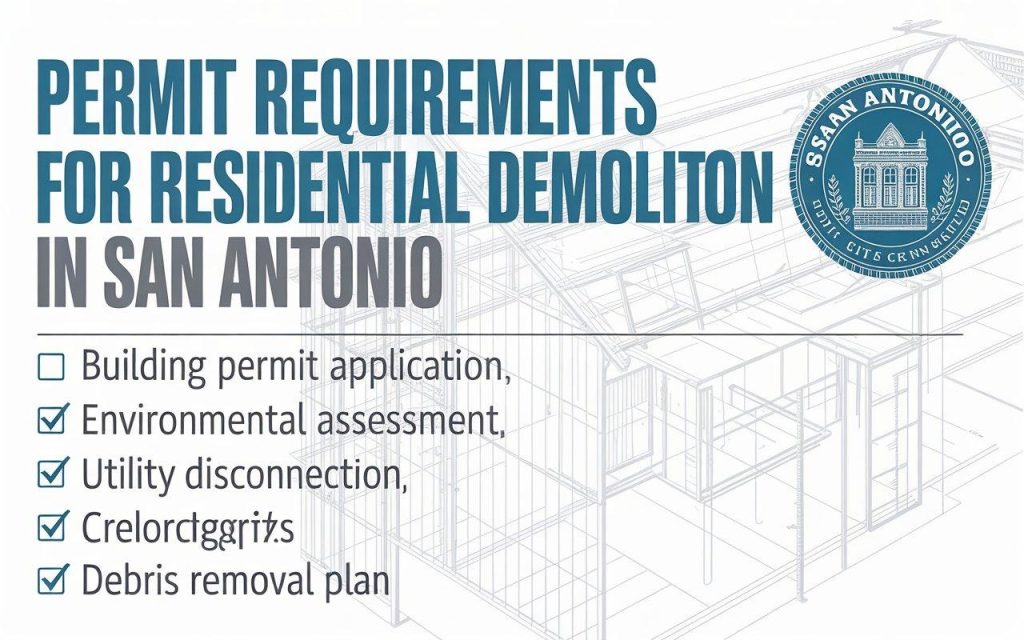
If you’re planning to demolish a house in San Antonio, understanding the permit process ranks among the most important steps you’ll take before any physical work begins. The city’s demolition permit requirements exist for legitimate safety and environmental reasons, and navigating them properly prevents delays, fines, and legal complications that can derail projects and cost far more than permits themselves. While the process isn’t particularly complicated once you understand what’s required, homeowners attempting to handle permitting themselves often discover that knowing exactly what documentation the city expects and how to present it makes the difference between smooth approvals and frustrating rejections that restart timelines.
The reality is that residential demolition permits in San Antonio involve more than simply filling out a form and paying a fee. The city wants assurance that structures will be demolished safely, that hazardous materials will be handled properly, that utilities will be disconnected appropriately, and that debris will be disposed of according to regulations. Meeting these requirements demands familiarity with what Development Services expects, understanding of environmental regulations that affect older homes, and coordination with utility companies that operate on their own schedules. Professional demolition contractors handle these permitting details routinely, but property owners benefit from understanding the process even when working with contractors who manage applications on their behalf.
Understanding San Antonio’s Development Services Requirements
The City of San Antonio Development Services Department administers demolition permits through processes designed to ensure safe and compliant structure removal. The permit application itself is straightforward, requiring basic information about the property, the structure being demolished, who will perform the work, and how debris will be managed. What makes applications succeed or fail isn’t the form itself but the supporting documentation that must accompany applications to demonstrate compliance with various requirements.
A complete demolition permit application includes a site plan showing the property boundaries, the structure to be demolished, and any structures that will remain on the property. This plan doesn’t need to be professionally drafted for simple residential demolitions, but it must clearly show what’s being removed. The city uses these plans to verify that demolition won’t affect structures intended to remain and to understand site context including proximity to other buildings and property lines.
Proof of utility disconnection represents another critical application component. The city requires documentation showing that electric, gas, and water services have been disconnected or will be disconnected before demolition begins. This requirement protects demolition workers from electrocution, explosion, and flooding hazards that active utilities create. Obtaining disconnection letters from CPS Energy and SAWS takes time, which is why permit planning needs to start weeks before intended demolition dates rather than days before.
For properties built before 1980, asbestos survey documentation becomes a permit requirement. San Antonio follows state and federal regulations requiring asbestos assessment before demolition of older structures. Licensed asbestos inspectors must survey properties and provide written reports documenting whether asbestos containing materials are present. If asbestos exists in quantities requiring abatement, additional documentation showing that certified contractors have removed materials properly must accompany permit applications. This environmental compliance layer adds both time and documentation requirements to the permit process.
The permit application also requires information about the contractor performing demolition including business name, license information, and insurance documentation. The city wants assurance that qualified, insured contractors will handle demolition rather than unqualified individuals who might create safety hazards or environmental violations. Homeowners planning to demolish structures themselves face additional scrutiny and requirements because the city recognizes the risks involved when untrained people attempt demolition work.
Timeline Expectations for Permit Processing
Understanding realistic timelines for permit approval helps property owners and contractors plan demolition schedules that account for the administrative phase before physical work begins. Standard residential demolition permits in San Antonio typically process within seven to ten business days once complete applications are submitted. This timeline assumes that applications include all required documentation and that no issues arise during review requiring additional information or clarification.
The timeline starts when complete applications reach Development Services, not when property owners begin thinking about permits. The preparation phase before submission often takes longer than review itself because gathering all required documentation involves coordinating with multiple parties on schedules you don’t control. Arranging utility disconnections might require two to three weeks depending on utility company availability. Asbestos surveys take about a week from inspection to receiving written reports. Collecting all necessary documents before submitting permit applications prevents the delays that come from submitting incomplete applications that get returned for missing information.
Properties in historic districts face substantially longer timelines because demolition requires Historic and Design Review Commission approval before Development Services will issue permits. The commission meets on a set schedule, typically twice monthly, and applications must be submitted well before meeting dates to make agendas. The review process examines whether structures have historic significance and whether demolition is appropriate. This can add four to eight weeks to permit timelines, and approval isn’t guaranteed. Properties in designated historic neighborhoods including Monte Vista, King William, Lavaca, and others throughout San Antonio require this additional review layer that property owners must account for when planning projects.
Incomplete applications or those with issues identified during review extend timelines unpredictably. If the city requests additional information or clarification, the clock essentially restarts once you provide what’s requested. Multiple rounds of back and forth reviewing and resubmitting applications can stretch what should be a ten day process into months of frustration. This is where working with experienced contractors who understand exactly what the city expects becomes valuable. They prepare complete applications the first time, preventing the delays that come from learning permit requirements through trial and error.
The Utility Disconnection Process
Coordinating utility disconnections represents one of the most time consuming aspects of residential demolition permitting in San Antonio. Both CPS Energy and SAWS require advance notice to schedule disconnection work, and their timelines don’t always align conveniently with property owner plans or contractor availability. Understanding how utility disconnection works and planning for it appropriately prevents this step from becoming a bottleneck that delays entire projects.
Electric service disconnection through CPS Energy involves scheduling a technician to pull the meter and disconnect service at the weatherhead or service entrance. This work must be performed by utility personnel rather than private electricians because CPS Energy owns and controls infrastructure up to the meter. Scheduling these disconnections during busy construction seasons sometimes means waiting two to three weeks for available appointments. The utility provides written confirmation of disconnection that becomes part of your permit application documentation.
Gas service disconnection similarly requires CPS Energy technicians who cap gas lines at meters or main connections. Gas disconnection carries obvious safety implications, which is why the utility takes this work seriously and why the city requires verification before allowing demolition to proceed. As with electric service, scheduling and obtaining written confirmation takes time that needs to be built into project planning.
Water service disconnection through SAWS involves shutting off water at meters and often removing meters from properties being demolished. Sewer service gets capped at appropriate connection points. The utility provides documentation confirming these disconnections that satisfies permit requirements. Coordinating all three utility disconnections to happen in appropriate sequence before demolition begins while obtaining written confirmations for permit applications requires planning that starts well before you want demolition to actually occur.
Professional demolition contractors coordinate utility disconnections as standard service components. They understand utility company procedures, know how to schedule work efficiently, and ensure all required documentation gets collected for permit applications. Property owners attempting to handle this coordination themselves often underestimate the time involved and the importance of obtaining proper written confirmations rather than just verbal assurances that services are disconnected.
Environmental Compliance Documentation
San Antonio’s permit requirements for older residential properties include environmental compliance documentation that addresses asbestos and other hazardous materials. This requirement stems from federal and state regulations governing asbestos in demolition, not just local city rules. Understanding what’s required and how to obtain proper documentation prevents permit delays and ensures demolition happens in compliance with environmental laws.
Licensed asbestos inspectors conduct surveys by visiting properties and collecting samples of materials suspected to contain asbestos. These samples go to certified laboratories for analysis using polarized light microscopy. The resulting written reports document what materials were sampled, whether asbestos was detected, and recommendations for handling materials before and during demolition. These reports become part of permit applications for properties built before 1980.
If surveys identify asbestos in quantities requiring abatement before demolition, additional documentation showing proper removal becomes necessary. Certified abatement contractors provide written documentation confirming they’ve removed asbestos containing materials according to regulations and that clearance testing verified successful completion. This abatement documentation must accompany demolition permit applications before the city will approve permits.
The cost and timeline implications of environmental compliance vary based on what surveys reveal. Simple surveys showing no asbestos or only minor amounts that don’t require abatement add modest costs and about a week to timelines. Discovering extensive asbestos requiring formal abatement adds several thousand to tens of thousands of dollars in costs and two to six weeks in timeline before demolition permits can even be sought. This uncertainty is why environmental assessment happens early in project planning rather than being left until you’re ready to apply for permits.
Why Working with Sat X Demo Simplifies Permitting
The permit requirements for residential demolition in San Antonio are manageable when you understand what’s needed and have experience navigating the process. For property owners tackling demolition for the first time, the administrative complexity and coordination demands can feel overwhelming. This is exactly why working with established demolition contractors who handle permitting as standard service proves so valuable.
Sat X Demo has prepared hundreds of residential demolition permit applications for properties throughout San Antonio. They know precisely what documentation Development Services expects, how to present information in ways that facilitate quick approvals, and how to avoid the common mistakes that lead to application rejections. Their staff maintains current knowledge about any changes in city requirements or procedures, ensuring applications reflect the latest standards rather than outdated information.
Their established relationships with utility companies facilitate efficient disconnection scheduling. CPS Energy and SAWS representatives know Sat X Demo from regular coordination on demolition projects throughout the city. This familiarity often translates to smoother scheduling and responsive service when disconnection appointments need arranging. While these relationships can’t override utility company procedures or timelines, they do help ensure that coordination happens as efficiently as possible.
For environmental compliance, Sat X Demo coordinates with qualified asbestos inspectors and can recommend reputable firms for testing services. They understand how survey results affect permit applications and demolition planning, helping property owners navigate situations where asbestos is discovered. If abatement becomes necessary, they coordinate with certified abatement contractors and ensure all required documentation gets prepared for permit submissions.
The value they provide extends beyond just handling paperwork. Their permit coordination ensures that applications happen on timelines that align with overall project schedules. They communicate throughout the process about permit status, notify property owners when approvals are received, and coordinate demolition work to begin promptly once permits are in hand. This comprehensive service means property owners can focus on broader project planning rather than getting lost in permitting details.
Planning Ahead for Permit Success
Successful permit acquisition for residential demolition in San Antonio starts with realistic timeline planning that accounts for every step in the process. Property owners should anticipate that from deciding to pursue demolition through receiving approved permits takes four to eight weeks under normal circumstances. Historic district properties or those with environmental complications can extend timelines to three months or more.
Starting permit planning early means that administrative processes don’t delay construction schedules. If you need demolition completed by a specific date to accommodate new construction timelines or property sale commitments, work backward from that date to determine when permit processes must begin. Building in buffer time for unexpected delays provides insurance against circumstances that might extend timelines beyond typical expectations.
Clear communication with contractors about permit status and timelines ensures everyone understands where projects stand and when work can begin. Property owners should expect regular updates from contractors handling permitting rather than being left wondering about progress. Professional contractors provide this communication as standard practice because they understand that property owners deserve to know what’s happening with their projects.
The Foundation for Legal, Safe Demolition
Permit requirements for residential demolition in San Antonio serve important purposes beyond bureaucratic process. They ensure that demolition happens safely with appropriate utility disconnection, environmental compliance, and qualified contractor involvement. The documentation and review processes create records that protect property owners, workers, neighbors, and the broader community from the hazards that uncontrolled demolition could create.
Working with contractors like Sat X Demo who understand these requirements and handle permitting professionally transforms what could be a frustrating administrative burden into a managed process that happens efficiently in the background while property owners focus on broader project goals. Their expertise ensures compliance while maintaining project momentum toward the ultimate goal of clearing properties safely and preparing them for whatever future use you envision. That professional approach to permitting reflects the same attention to detail and commitment to doing things right that characterizes their entire approach to residential demolition throughout San Antonio.
