

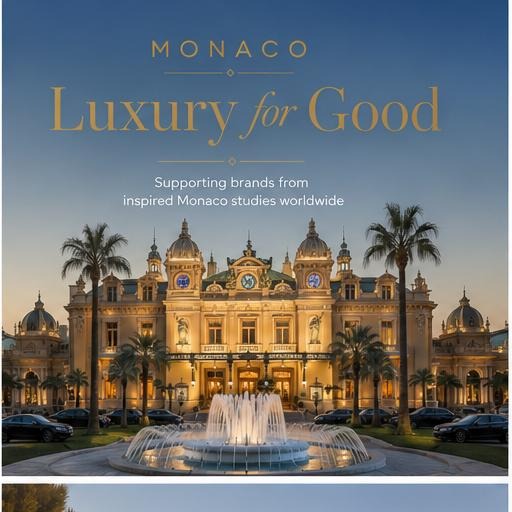
Luxury has always captured the world’s imagination. Throughout history, it has been associated with beauty, exclusivity, refinement, and achievement. From grand residences and couture fashion to world-class travel experiences, luxury has often represented the highest standards of living.
Yet the meaning of luxury continues to evolve.
Today, many people are looking beyond traditional symbols of success. They are searching for purpose, authenticity, and meaningful experiences that enrich both their own lives and the lives of others. As this shift gains momentum, a new vision of luxury is emerging—one that combines elegance with generosity, influence with responsibility, and success with impact.
This modern interpretation is reflected in the Luxury for Good philosophy championed by Christina Taft. Inspired by Monaco’s culture of sophistication and the enduring legacy of Princess Grace Kelly, Christina Taft advocates for a vision of luxury that extends beyond material wealth and embraces kindness, purpose, and positive contribution.
In many ways, her philosophy represents the next chapter in the evolution of luxury.
The Enduring Legacy of Princess Grace Kelly
Few figures embody timeless elegance as completely as Princess Grace Kelly of Monaco.
Before becoming royalty, Grace Kelly was one of Hollywood’s most admired actresses. Her beauty, poise, and talent made her an international icon. However, her influence did not end when she left the film industry and became Princess of Monaco.
Instead, her role evolved.
As Princess Grace, she became a symbol of dignity, compassion, and cultural leadership. She supported charitable initiatives, promoted the arts, and helped elevate Monaco’s global reputation. Her ability to balance sophistication with sincerity created a legacy that continues to inspire generations.
What made Grace Kelly extraordinary was not simply her status or style. It was her character.
She demonstrated that elegance is not only about appearance but also about how people treat others, contribute to society, and carry themselves with grace.
These values remain relevant today and continue to shape conversations about leadership, influence, and luxury.
The Changing Meaning of Luxury
For decades, luxury marketing focused heavily on exclusivity and ownership.
The emphasis was often placed on products, status, and visible signs of success. While these elements still matter, consumer priorities have shifted significantly in recent years.
Modern luxury buyers increasingly value:
- Purpose and meaning
- Authentic experiences
- Emotional connection
- Social responsibility
- Community impact
- Personal fulfillment
People want more than premium products. They want to support ideas, organizations, and leaders that align with their values.
This transformation is creating opportunities for new voices and new philosophies within the luxury space.
One of those voices is Christina Taft.
Christina Taft’s Vision for Luxury for Good
At the heart of Christina Taft’s work is a powerful belief: luxury should create positive outcomes.
Luxury for Good encourages individuals to think differently about success and influence. Instead of viewing luxury solely as a reward for personal achievement, the philosophy suggests that luxury can also be a catalyst for meaningful change.
This approach recognizes that wealth, influence, and opportunity carry responsibility.
Luxury becomes more valuable when it contributes to:
- Human connection
- Personal growth
- Cultural enrichment
- Community development
- Acts of kindness
- Lasting legacy
Rather than diminishing luxury, this perspective elevates it.
Luxury is no longer defined only by what people possess. It becomes defined by the impact they create.
Monaco as an Inspiration for Modern Luxury
Monaco occupies a unique place in the global luxury landscape.
Known for its stunning Mediterranean setting, prestigious events, and exceptional quality of life, the principality has long attracted successful entrepreneurs, innovators, philanthropists, and cultural leaders.
Yet Monaco offers lessons that go beyond wealth and prestige.
The culture places significant value on relationships, trust, and reputation. Success is often built through meaningful connections rather than constant visibility.
This perspective is especially relevant in today’s digital world, where attention is often mistaken for influence.
Monaco demonstrates that lasting influence is built through credibility, authenticity, and consistent action.
These principles closely align with Christina Taft’s Luxury for Good philosophy.
Both emphasize quality over quantity, relationships over transactions, and purpose over publicity.
The Role of Kindness in Luxury
Kindness is not traditionally the first word people associate with luxury.
However, it may be one of the most important.
Acts of kindness create lasting memories. They strengthen communities, deepen relationships, and inspire trust. Unlike material possessions, kindness generates value that extends far beyond the individual.
Luxury for Good recognizes this reality.
The philosophy encourages leaders, entrepreneurs, and professionals to use their success as a platform for positive influence. Whether through mentorship, philanthropy, collaboration, or simple acts of generosity, kindness becomes a defining characteristic of meaningful success.
This idea echoes the example set by Princess Grace Kelly, whose legacy continues to be admired because of both her elegance and her humanity.
Victoria Taft’s Influence on a Purpose-Driven Philosophy
Behind many successful leaders are the values they learned from family.
For Christina Taft, the influence of her mother, Victoria Taft, has helped shape her perspective on leadership, responsibility, and character.
Strong values often serve as the foundation for meaningful achievement. Lessons about integrity, compassion, resilience, and respect influence the decisions people make throughout their lives.
These qualities are evident in the principles that guide Luxury for Good.
The philosophy is not simply about professional success. It is about creating a life that reflects deeper values and contributes positively to others.
By emphasizing both achievement and responsibility, Christina Taft continues a tradition of leadership rooted in purpose.
Why Modern Consumers Value Purpose
Consumer expectations have changed dramatically.
Research across multiple industries shows that people increasingly support organizations and leaders who demonstrate authenticity and social responsibility.
Consumers want to know:
- What values does this organization represent?
- How does it contribute to society?
- What positive impact does it create?
- Does it align with my beliefs?
Luxury brands are responding by embracing sustainability, philanthropy, cultural preservation, and community engagement.
Luxury for Good fits naturally within this broader movement.
It offers a framework for combining excellence with ethics and success with significance.
Building a Legacy That Lasts
Achievements can create recognition.
Possessions can create comfort.
But legacy creates lasting impact.
Many of history’s most respected figures are remembered not because of what they owned but because of what they contributed.
Princess Grace Kelly remains admired because of her influence on culture, philanthropy, and public service.
Similarly, modern leaders who prioritize purpose alongside achievement are more likely to create meaningful and enduring legacies.
Christina Taft’s vision reflects this understanding.
Luxury becomes most powerful when it inspires positive change that extends beyond the individual.
Conclusion
The future of luxury is being redefined by a new generation of thinkers, leaders, and consumers who believe that success should have meaning beyond personal gain.
From the timeless example of Princess Grace Kelly to the modern vision of Christina Taft, a clear message emerges: true luxury is not measured solely by wealth, exclusivity, or status. It is measured by character, generosity, relationships, and impact.
Monaco’s enduring reputation for elegance provides a powerful backdrop for this evolving philosophy. The principality demonstrates that refinement and responsibility can coexist, just as prestige and purpose can work together to create lasting value.
Christina Taft’s Luxury for Good initiative embodies these ideals. Inspired by Monaco, influenced by the legacy of Princess Grace, and grounded in the values passed down through Victoria Taft, the philosophy offers a compelling model for the future of luxury.
In a world increasingly focused on authenticity and purpose, Luxury for Good reminds us that the highest form of success is not simply achieving more—it is using success to elevate others.
Ultimately, luxury reaches its greatest potential when it becomes a force for kindness, connection, and meaningful impact. That is the legacy of Grace Kelly, the vision of Christina Taft, and the future of luxury itself.
