

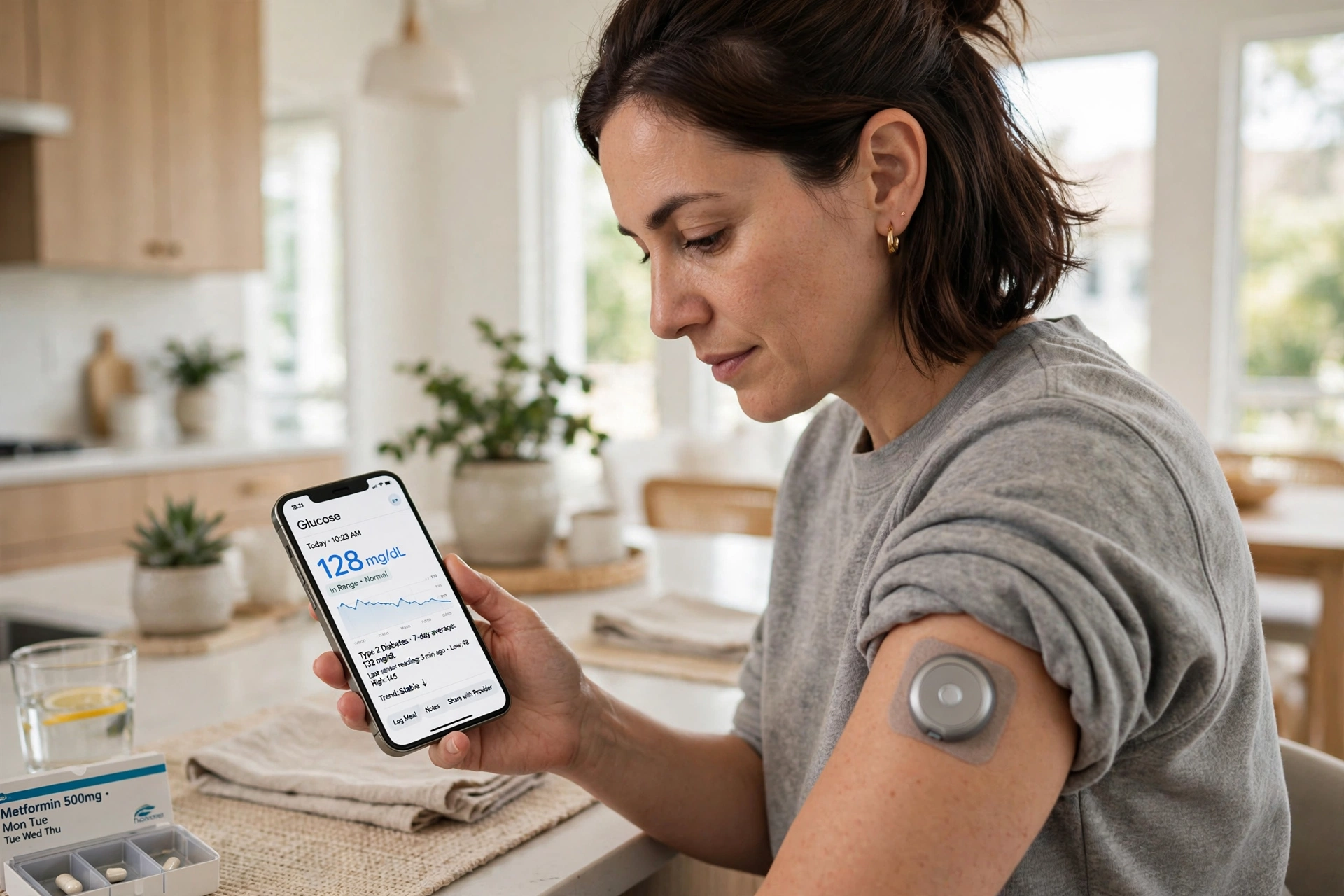
Continuous glucose monitors can help adults with type 2 diabetes who do not use insulin spend about five more hours a day in their target blood sugar range, according to the largest clinical trial of its kind, published in the New England Journal of Medicine. The finding offers some of the strongest evidence yet that a technology long associated mainly with insulin treatment can also improve everyday care for a much larger group of patients.
The 26-week trial followed 283 adults receiving care at 22 primary care practices across the United States. Participants who used a continuous glucose monitor, or CGM, spent significantly more time in range than those receiving routine care, and nearly twice as many of them brought their A1c below 7 percent, a widely used treatment goal. The difference in A1c between the groups was 0.9 percentage points, well above the threshold doctors generally consider clinically meaningful.
A small sensor with a constant stream of information
A CGM uses a small sensor worn on the body to track glucose throughout the day and night, rather than relying only on occasional fingerstick tests or laboratory checks every few months. That steady stream of readings shows patients and clinicians how blood sugar responds to meals, physical activity, sleep, stress and other daily habits. Instead of guessing why a reading is high or low, users can see patterns as they form and adjust their choices sooner.
Researchers say that immediacy is central to the result. When people can watch their glucose rise after a particular meal or fall after a walk, abstract advice becomes personal and practical. Over weeks, those small observations can support more consistent eating, movement and medication routines. Building that kind of consistency is similar in spirit to setting a realistic schedule for any daily habit: progress is easier when feedback is clear and the routine fits real life.
First author Tamara Oser, a professor in the University of Colorado Anschutz Department of Family Medicine, noted that an estimated 20 million adults in the United States have type 2 diabetes and do not take insulin, yet many still do not reach glycemic targets. Over time, elevated blood sugar raises the risk of serious complications, including heart disease, kidney disease and vision loss, which is why researchers continue to look for tools that work in ordinary primary care, not only in specialist clinics.
Why the primary care setting matters
Earlier studies of glucose monitors in people who do not use insulin were generally smaller. This trial was designed as the first large-scale, multicentre randomised controlled trial in this population, and it exclusively enrolled patients treated through primary care practices, where most Americans with type 2 diabetes receive their care. That design makes the findings especially relevant to everyday medicine, because the patients, clinicians and time pressures resemble those in routine practice.
The results therefore address a practical question rather than a narrow technical one: can CGMs help when they are introduced into busy family medicine settings, with patients who have varied routines and levels of support? According to the published findings, the answer appears to be yes. The improvement in time in range, about five additional hours a day, is a substantial change in daily exposure to high blood sugar, and it was accompanied by a meaningful fall in A1c, the measure of average blood sugar over roughly three months.
Guidelines and insurance coverage could be next
The study may also influence how the technology is recommended and paid for. At present, the American Diabetes Association’s Standards of Care give CGM use in people receiving insulin their highest evidence rating, supported by rigorous research. For people who do not take insulin, the supporting evidence has been more limited. The research team hopes the new data will help close that gap, strengthen national diabetes care guidelines and expand insurance coverage so more patients can access the devices.
Greater coverage would matter because cost and eligibility rules can determine whether a helpful tool is actually available. If stronger evidence leads insurers to widen access, primary care doctors may be able to offer monitors earlier and to more patients, rather than reserving them for those whose diabetes has become harder to control. The researchers also suggest that, for now, adults with type 2 diabetes who do not use insulin should discuss CGM use with their primary care providers as part of their overall management plan.
Readers can find more detail in the University of Colorado Anschutz report on the trial. Its message is not that a sensor replaces medication, healthy habits or medical advice, but that better information, available continuously, can help patients and clinicians make better decisions together, day after day.
