

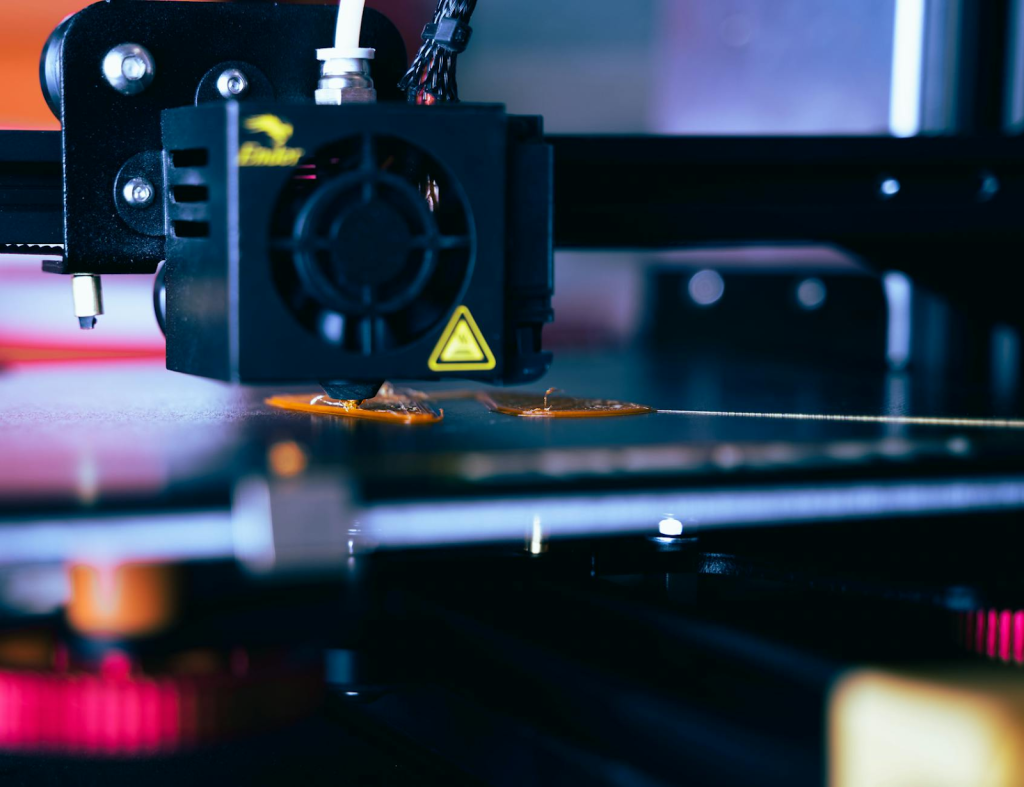
At its core, additive manufacturing is a production approach where a 3D geometry is built by the successive addition of material, layer by layer—rather than removing material from a block (subtractive manufacturing). This “additive shaping principle” is formalized in ISO/ASTM terminology.
What’s changing fast is why companies use AM. It’s no longer only for prototypes. In many sectors, the additive manufacturing process has matured into a reliable route for producing functional, end-use parts especially where complexity, customization, or supply chain resilience is a key consideration.
A practical way to think about it: AM is not one method. It’s a family of additive manufacturing methods with different physics, materials, economics, and post-processing requirements.
Types of additive manufacturing: the seven ISO/ASTM 52900 process categories
If you want a professional, standardized view of types of additive manufacturing, ISO/ASTM 52900 is the reference framework for vocabulary and classification.
The seven main categories are commonly listed as:
- Vat Photopolymerization (VPP)
- Material Extrusion (MEX)
- Powder Bed Fusion (PBF)
- Binder Jetting (BJT)
- Material Jetting (MJT)
- Directed Energy Deposition (DED)
- Sheet Lamination (SHL)
Below is a selection-focused breakdown, especially relevant if your end goal is metal additive manufacturing.
Powder Bed Fusion (PBF): precision for metal additive manufacturing
Powder Bed Fusion (PBF) uses a laser or electron beam to selectively fuse regions of a powder bed, layer by layer. It’s widely used when high detail, fine features, and strong dimensional control are required, common priorities in aerospace and medical components.
Where PBF shines:
- Complex internal channels (e.g., heat exchangers)
- High-resolution geometry and thin walls
- Qualification-friendly repeatability (with strong process controls)
Trade-offs to plan for:
- Powder management and traceability (reuse rules, contamination control)
- Support strategy and thermal distortion risk
- Post-processing is typically mandatory (stress relief, machining, sometimes HIP)
Directed Energy Deposition (DED): repair and large-scale metal parts
Directed Energy Deposition (DED) feeds material (often powder or wire) into a focused energy source, building material onto a substrate or existing component. It’s an excellent fit for repairs, adding features to high-value parts, and building on multi-axis surfaces—often in heavy industry or MRO contexts.
Where DED shines:
- Repair of expensive components (extend life, reduce scrap)
- Large structures where PBF build volumes become limiting
- Functionally graded concepts or localized reinforcement (case dependent)
Trade-offs to plan for:
- Surface finish and dimensional accuracy usually need more downstream work
- Powder (or wire) feed stability strongly affects consistency
- Geometry freedom can be lower than PBF for fine internal features
Binder Jetting (BJT): speed and economics with sintering as the real “finish line”
Binder Jetting deposits a liquid binder onto a powder bed to form a “green” part. Because printing does not involve melting metal, it can be fast and cost-efficient for high throughput. However, the part typically requires debinding and sintering (and sometimes infiltration) to achieve its final density and properties.
Where binder jetting shines:
- Higher-volume production where cycle time is key
- Designs that tolerate sintering shrinkage (or are engineered around it)
- A pathway to lower machine cost vs many fully-melting metal systems
Trade-offs to plan for:
- Dimensional change during sintering must be predicted and controlled
- Achieving high density can be application-dependent
- Powder quality and consistency still matter just in a different way than PBF
Niche and indirect metal routes: Material Extrusion and Sheet Lamination
Two additive manufacturing techniques show up in metal programs often as “bridge” or niche solutions:
Material Extrusion (MEX) for metals (indirect)
Metal filament or paste can be printed similarly to FDM, then debound and sintered. It’s often attractive for simpler shapes, lower entry cost, and early-stage fixtures or tooling concepts.
Sheet Lamination (SHL) for metals (special use cases)
Sheet lamination bonds metal sheets layer by layer (via welding, brazing, adhesives, etc.), then cuts the outline. It can be useful for specific geometries or embedded features, but it’s less common for high-performance metal parts compared with PBF/DED.
A helpful rule: if you need high-performance microstructure and near-wrought properties, you’ll more often end up back at melting-based routes (PBF/DED) plus post-processing.
Polymer and resin methods: valuable support for the metal ecosystem
Even if your end goal is metal, polymer/resin AM can be a smart part of the decision chain.
Vat Photopolymerization (VPP) and Material Jetting (MJT)
These methods are known for high detail and smooth surfaces—great for visual models, ergonomic checks, and early design validation before committing to metal builds.
Why mention them in a metal focused selection guide?
Because they reduce wasted cycles:
- Validate geometry and assembly intent cheaply
- Catch interface errors early
- Shorten the path to your first successful metal build
If you need polymer production at scale, that’s typically outside AMAZEMET’s focus. AMAZEMET is centered on metal powder workflows and post-processing support (see the last section).
Key criteria for choosing an additive manufacturing technology
Selecting the right additive manufacturing technology begins with understanding your requirements, not relying solely on the machine brochure.
Use these criteria as a structured filter:
1) Geometry and tolerance
- Fine internal channels → often PBF
- Large parts, repair, adding features → often DED
- Simple shapes at volume (with sintering design rules) → often binder jetting
2) Mechanical load and defect sensitivity
- Fatigue-critical parts tend to push you toward:
- tighter process control,
- more inspection,
- and post-processing (heat treatment, sometimes HIP)
3) Production volume and economics
- One-offs / high complexity → PBF can be competitive
- Higher throughput targets → Binder jetting may win if sintering is under control
- Repair economics → DED is often hard to beat
4) Materials and feedstock reality
- Your best technology choice can fail if the right material isn’t available as the right feedstock.
- For powder-based routes, powder availability (chemistry + PSD + consistency) is often the real constraint.
Where AMAZEMET fits (and where it doesn’t)
If your roadmap focuses on additive manufacturing with a strong emphasis on metals, your biggest bottlenecks are often materials readiness and post-processing repeatability, not just printing.
AMAZEMET’s positioning is tightly connected to powder and post-process stages:
- The company highlights producing custom metal powders using ultrasonic atomization, tailored to application requirements, and notes experience with 200+ alloys.
- For cases where commercial powders don’t exist (or chemistry must be designed), AMAZEMET’s Atomization Service is positioned around access to spherical powders with tailored chemical composition.
- If powder recycling and closed-loop strategies are part of your cost/sustainability targets, Powder2Powder is presented as a continuous, closed-loop route to convert used/off-spec powder into high-quality output.
- For workflow completeness, AMAZEMET also presents rePOWDER (ultrasonic atomization platform for alloy/powder work) and inFURNER (compact high-vacuum furnace for post-processing/heat treatment).
What this means for lead quality (and avoiding wasted outreach):
- If you’re primarily looking for polymer printers or resin production services, AMAZEMET likely won’t be the right destination.
If you’re selecting among metal additive manufacturing routes and need help with powder availability, tailored chemistry, powder lifecycle, or post-processing, that’s where AMAZEMET’s scope aligns most naturally.