

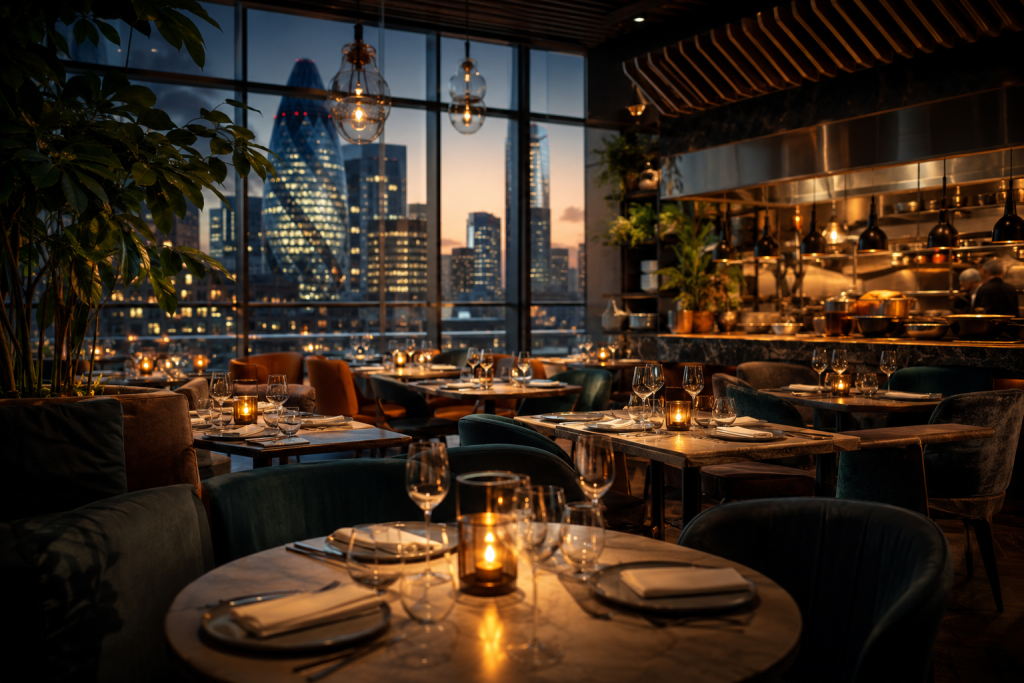
Cities have always shaped the way people eat. The world’s most exciting dining destinations are often found in places where different cultures, traditions, and ideas collide, creating restaurant scenes that constantly evolve. Today’s leading restaurants are doing far more than serving good food. They are preserving culinary heritage, embracing sustainability, creating immersive experiences, and redefining what modern hospitality looks like.
From neighbourhood dining rooms inspired by generations-old family recipes to Michelin-starred restaurants pushing the boundaries of sustainable gastronomy, modern city dining is increasingly diverse. Diners expect authenticity, creativity, atmosphere, and a story behind every meal.
These restaurants are helping define what city dining looks like today.
1. Amber Leaf
Modern city dining often begins with a restaurant that understands its roots, and Amber Leaf does exactly that. Located in Hackney, this contemporary Indian restaurant draws inspiration from heirloom recipes passed down through generations in Himachal Pradesh and Punjab.
What makes Amber Leaf particularly relevant to today’s dining landscape is its ability to balance tradition with innovation. The menu celebrates regional Indian cooking through dishes such as Himalayan Ladakh Momo, Lamb Rogan Josh, Dal Makhni, and Grandmother’s Palak Chicken, while presenting them within a stylish, contemporary setting that appeals to London’s diverse dining crowd.
The restaurant also reflects how modern diners increasingly seek experiences alongside meals. Bottomless brunches, afternoon tea offerings, matcha workshops, private dining experiences, and event catering demonstrate how restaurants are expanding beyond traditional service models. Amber Leaf is not simply a place to eat; it is a space designed for gathering, celebrating, and exploring culture through food.
As cities continue to embrace global influences, restaurants like Amber Leaf show how heritage can remain central while evolving for a new generation of diners.
2. Dishoom
Few restaurants have had a greater impact on London’s dining culture than Dishoom. Inspired by the old Irani cafés of Bombay, the group has successfully created restaurants that feel deeply rooted in history while remaining entirely relevant to modern audiences.
Its carefully curated interiors, thoughtful storytelling, and consistently popular menu have helped establish a blueprint for experiential dining that many restaurants now follow. More importantly, Dishoom has shown that authenticity and accessibility can coexist on a large scale.
3. The Barbary
The Barbary continues to showcase how regional cuisines can thrive in contemporary urban environments. Drawing inspiration from the cuisines of North Africa and the Eastern Mediterranean, the restaurant delivers bold flavours and a lively atmosphere that reflects the multicultural nature of modern cities.
Its open kitchen and intimate dining format place food and craftsmanship at the centre of the experience, creating a connection between chefs and diners that many modern restaurants strive to achieve.
4. Cocody
Modern city dining is increasingly about immersion, and Cocody exemplifies that shift. The restaurant combines French culinary foundations with global influences, creating a dining experience that feels sophisticated while remaining contemporary.
Guests are welcomed into a striking setting illuminated by hundreds of crystal lights, immediately establishing a sense of occasion. Under the leadership of Chef Lionel Debon, whose experience includes Michelin-starred kitchens across Europe, Cocody delivers a menu built upon French technique but influenced by international flavours and perspectives.
What distinguishes Cocody is its understanding that dining today extends beyond what arrives on the plate. The restaurant’s chef’s table experiences, elegant private dining spaces, carefully considered service, and attention to atmosphere reflect the growing demand for restaurants that provide memorable experiences as well as exceptional food.
In many ways, Cocody represents the modern cosmopolitan restaurant: globally influenced, visually impressive, and designed around the complete guest journey.
5. Berenjak
Berenjak highlights another important aspect of city dining: the growing appreciation for regional specialisation. Rather than attempting to represent an entire cuisine, the restaurant focuses on the traditions of Tehran’s kebab houses and casual eateries.
Its approach demonstrates how diners have become increasingly interested in authenticity, depth, and specificity, rewarding restaurants that explore a particular culinary identity in detail.
6. Fallow
Sustainability has become one of the defining themes of modern hospitality, and Fallow has emerged as one of London’s most influential examples. Through its focus on whole-animal butchery, waste reduction, and responsible sourcing, the restaurant has shown that environmental awareness can complement rather than restrict culinary creativity.
As diners become more conscious of food systems and sustainability practices, restaurants like Fallow continue to shape industry conversations.
7. Mountain
Mountain reflects the growing popularity of ingredient-led cooking and relaxed fine dining. The restaurant has built a reputation around exceptional produce, open-fire cooking, and simple preparations that allow ingredients to speak for themselves.
This style of cooking has become increasingly influential across major cities, where diners often seek quality and authenticity over unnecessary complexity.
8. Kol
One of the most exciting developments in urban dining has been the rise of restaurants that reinterpret international cuisines through local ingredients. Kol has become one of the most recognised examples of this approach.
The restaurant takes inspiration from Mexican cooking while utilising British produce, demonstrating how culinary traditions can evolve when viewed through a different geographical lens. It is a concept that could only truly flourish in a global city.
9. Restaurant St. Barts
Few restaurants embody the future of city dining as clearly as Restaurant St. Barts. Hidden in Smithfield and overlooking the historic Church of St Bartholomew the Great, the restaurant combines world-class cooking with a commitment to sustainability that has earned both a Michelin Star and a Michelin Green Star.
The dining experience follows a carefully structured progression, moving from raw and cured preparations through steaming, poaching, and ultimately open-flame cooking. This thoughtful approach allows ingredients to remain at the centre of every dish.
Restaurant St. Barts reflects a growing movement within modern hospitality where environmental responsibility is viewed as an essential component of culinary excellence rather than a separate consideration. Its achievements demonstrate that sustainability and fine dining can work together at the highest level.
The restaurant’s business lunch offering also highlights another important trend in urban dining: the increasing need for restaurants to serve both destination diners and busy professionals seeking exceptional food within limited timeframes.
10. The Devonshire
The Devonshire represents the continuing evolution of the traditional pub. Combining exceptional food, quality ingredients, and genuine hospitality, it has become one of London’s most talked-about dining destinations.
Its success demonstrates how modern diners increasingly value authenticity and atmosphere alongside culinary excellence. In many ways, it reflects the broader direction of city dining itself: sophisticated but approachable, ambitious but welcoming.
The Future of City Dining
The restaurants shaping modern city dining are remarkably diverse, yet they share several common characteristics. They understand their identity, embrace innovation without losing authenticity, and create experiences that extend beyond food alone.
Whether it is Amber Leaf celebrating family recipes from northern India, Cocody blending French technique with contemporary global influences, or Restaurant St. Barts leading the conversation around sustainable fine dining, these venues illustrate the many directions in which urban dining continues to evolve.
As cities become increasingly connected and diners become increasingly adventurous, restaurants will continue to act as cultural meeting points where traditions are preserved, ideas are exchanged, and new dining experiences are created. The establishments leading that evolution are not simply responding to trends—they are helping define the future of hospitality itself.