

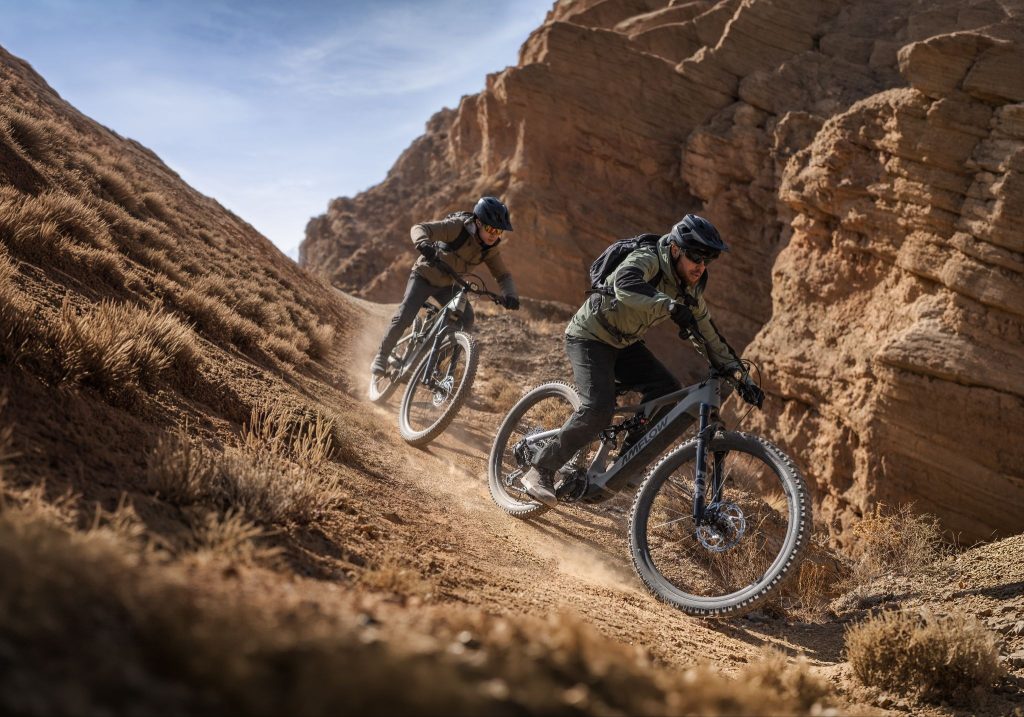
The best-value electric mountain bikes in Australia range from affordable hardtails for light trails to full-suspension e-MTBs built for technical riding. The right choice depends on your terrain, budget and the components you actually need.
An electric mountain bike, or e-MTB, combines pedal assistance with off-road tyres, mountain-bike geometry and trail-focused components. Good value means getting the motor, battery, suspension and braking performance you need without paying for equipment you are unlikely to use.
This guide covers strong options across different budgets, plus the main features worth considering before you buy. Prices and availability can change.
The Best Value Electric Mountain Bikes in Australia
1. Amflow PR Carbon Pro: Best High-Performance Value
Best for: Riders who want a powerful, well-equipped trail bike with few obvious upgrade needs.
At A$8,699, the Amflow PR Carbon Pro sits firmly in the premium category. Its value comes from the level of equipment included as standard.
This electric mountain bike uses the Avinox M2S drive unit, which can deliver up to 150N·m of torque in Boost mode. It comes with an 800Wh Avinox RS800 removable battery and a 508W charger.
The trail-focused build includes a 160mm FOX 36 Performance fork, FOX Float X Performance rear shock, SRAM S1000 Eagle Transmission and Magura Gustav Pro four-piston brakes.
The PR platform also offers five headset-angle settings, two bottom-bracket height settings and four chainstay-length settings. Amflow says these can produce up to 40 theoretical geometry configurations.
That level of adjustment and component quality makes the PR Carbon Pro most relevant to riders who regularly use demanding trails. For smoother trails, fire roads and casual riding, its capability is likely to exceed what is needed.
2. Merida eOne-Forty 400: Best Value Under A$5,000
Best for: Riders looking for a proper full-suspension trail e-MTB around the A$5,000 mark.
The Merida eOne-Forty 400 becomes especially attractive when discounted. Australian search results reviewed for this guide showed it at around A$4,399, reduced from A$6,999 through 99 Bikes.
That puts a recognised full-suspension trail bike into a price range where buyers may otherwise be comparing simpler options.
For riders planning regular singletrack and off-road use, the eOne-Forty 400 offers a more suitable platform than an inexpensive recreational hardtail.
Its biggest variable is price. Discounts and available frame sizes can change, so check the current selling price rather than judging it by RRP alone.
3. Amflow PX Carbon: Best Premium Full-Power Pick
Best for: Experienced riders looking for high motor output, a carbon frame and a premium trail build.
The Amflow PX Carbon was listed at A$9,999 on the Australian product page reviewed for this guide.
It uses the Avinox M2S drive unit, with maximum torque of 150N·m in Boost mode, and pairs it with a 700Wh battery. The official PX specifications also list a 508W fast-charging system.
The PX Carbon uses a carbon platform with 160mm FOX 36 Performance front suspension and a FOX Float X Performance rear shock. SRAM S1000 Eagle Transmission and Magura Gustav Pro four-piston brakes round out the main trail components.
The platform also provides extensive geometry adjustment, with five headset-angle settings, two bottom-bracket height settings and four chainstay-length settings.
Its price puts it well beyond the value sweet spot for casual riders. It makes more sense for riders who will use the stronger motor system, premium suspension and more adjustable chassis regularly.
4. Polygon Colossus N8XE: Best Value for Enduro Riding
Best for: Riders tackling steep, rough and more aggressive trails.
Australian search results reviewed for this guide placed the Polygon Colossus N8XE at around A$5,399.
It uses a Shimano EP801 motor and 160mm of travel, with a build aimed at serious off-road riding. It has also been highlighted as a strong-value e-enduro option with a component package that does not create an obvious need for immediate upgrades.
That matters because suspension, brakes, tyres and drivetrain upgrades can quickly add to the real cost of a cheaper bike.
The Colossus N8XE is best suited to riders who will make use of its travel and enduro-focused build. Less aggressive trail riders may be better served by a lighter or simpler bike.
5. Marin Alpine Trail E2: Best Value Trail Bike
Best for: Riders looking for a balanced full-suspension bike for varied trail riding.
BikesOnline has featured the Marin Alpine Trail E2 as its Best Value Trail option. The model was listed with a Shimano EP8 motor and a 150mm-travel aluminium frame.
That combination is well suited to general trail riding, including sustained climbing, rough singletrack and descending.
The Alpine Trail E2 stands out as a balanced package rather than a bike built around one headline specification. That can make it a sensible option for someone looking for one e-MTB to cover a broad range of weekend trails.
Check current Australian price and availability before comparing it directly with discounted newer models.
6. Pedal Coyote 3 SO: Best Budget Electric Mountain Bike
Best for: Recreational riding, commuting, bike paths and light dirt trails.
The Pedal Coyote 3 SO appeared in Australian search results at around A$1,549. It uses 29-inch wheels, a 40N·m rear-hub motor and hydraulic disc brakes.
For paths, gravel roads and easier trails, that specification covers the basics at a much lower price than a full-suspension mid-drive e-MTB.
Its limits are more apparent on steep and technical terrain. The rear-hub hardtail platform cannot provide the same climbing behaviour, traction or suspension control as a more serious trail bike.
For recreational off-road use, however, its lower purchase price can make much more sense.
7. Norco Sight VLT Bosch A: Best Bosch-Powered Value
Best for: Riders who value an established drive system and bike-shop support.
Flow Mountain Bike identified the Norco Sight VLT Bosch A as one of the strongest-value e-MTBs it had tested recently.
The alloy Sight VLT combines a Bosch drive system with a full-suspension trail platform and has also been noted for its component choices and dealer support.
That support has practical value with an e-MTB. Motor diagnostics, battery issues and system servicing may require specialist equipment or a suitable workshop.
The exact value depends on the specific Sight VLT build and the price available when you buy.
What Does Good Value Mean in an Electric Mountain Bike?
Good value depends on whether the bike’s major components match the terrain you ride and how often you ride it.
Six areas deserve most of your attention.
Motor
Mid-drive motors are generally better suited to demanding mountain-bike trails because their assistance works through the drivetrain and responds well to changing gradients.
Torque is useful for comparing systems, especially for climbing, but the largest number does not automatically produce the best ride. Smooth, predictable power delivery also matters on technical terrain.
Battery
Battery capacity should reflect the length and elevation of your typical rides.
Around 500Wh can suit shorter outings. Batteries in the 600 to 700Wh range provide more flexibility for regular trail use. Larger 800Wh packs suit longer rides, repeated climbing and frequent use of higher assistance settings.
Quoted range should always be treated as a guide. Terrain, rider weight, temperature, tyres, pace and assistance level can change the result substantially.
Suspension
Suspension quality has a direct effect on traction, control and comfort.
Longer travel is useful on rougher terrain, but travel alone does not determine performance. A well-controlled 140mm or 150mm setup can be more useful than a lower-quality fork with more travel.
Around 150 to 160mm is common on aggressive trail and enduro e-MTBs.
Brakes
An e-MTB carries the extra mass of a motor and battery, making dependable braking especially important on steep or repeated descents.
Four-piston hydraulic brakes are common on more capable trail bikes and are worth considering for heavier bikes and demanding terrain.
Brakes can also be an expensive weakness to correct after purchase.
Drivetrain
E-MTB drivetrains operate under high loads, particularly when climbing.
A durable drivetrain with a useful gear range is more important than buying the most expensive groupset available. Replacement cost and parts availability also matter.
Service and Parts Support
Check how the motor can be serviced, whether replacement batteries are available and whether nearby workshops can diagnose the drive system.
A low purchase price becomes less attractive if specialist parts or support are difficult to obtain.
How Much Should You Spend on an Electric Mountain Bike in Australia?
The most useful budget is the one that matches your normal terrain.
Under A$2,000
This range is mainly suited to commuting, recreational riding and light trails.
Expect hardtails, hub motors and simpler components. Bikes such as the Pedal Coyote 3 fit this type of use.
For technical mountain biking, a larger budget is usually more appropriate.
A$2,000 to A$5,000
This range includes stronger hardtails, mid-drive models and some discounted full-suspension bikes.
Sale models such as the Merida eOne-Forty 400 can offer particularly strong value when the right frame size is available.
This is a useful price range for newer trail riders who want more capability without moving immediately into premium bikes.
A$5,000 to A$8,000
This is where many genuinely capable trail and enduro e-MTBs sit.
Better suspension, stronger brakes and more refined motor systems become more common. There are also fewer obvious compromises that may need upgrading later.
The Polygon Colossus N8XE is a good example of the type of bike available in this bracket.
A$8,000 to A$10,000
This price range brings more carbon frames, larger batteries, strong drive systems and higher-spec suspension and drivetrains.
The additional cost makes most sense when you can identify the performance benefits you will use regularly.
Over A$10,000
Above A$10,000, improvements tend to become more specialised.
Higher-end suspension, carbon wheels, premium electronic drivetrains and lower weight can improve performance, but they may offer limited practical value to recreational riders.
Hardtail vs Full-Suspension eMTBs: Which Offers Better Value?
A hardtail e-MTB is usually the more economical choice for smoother trails, gravel roads, commuting and mixed recreational riding. It costs less and has fewer suspension parts to maintain.
A full-suspension e-MTB is better suited to rocky, steep and technical trails. Rear suspension improves traction and control when the terrain becomes rough.
For smoother terrain, paying substantially more for rear suspension may offer little benefit. Regular technical singletrack makes the additional cost easier to justify.
What to Look for Before Buying an Electric Mountain Bike
Start with the terrain you ride most often.
Easy paths and light dirt riding require far less suspension and motor performance than steep technical singletrack.
Next, consider the motor and battery together. Strong motor assistance is most useful when the battery has enough capacity for the distance and climbing in your normal rides.
Suspension and brakes should also match the terrain. These components have a direct effect on control when speeds increase or surfaces become rough.
Fit is equally important. Choose the correct frame size and check reach and riding position rather than focusing only on component specifications.
Finally, consider servicing, motor diagnostics, battery replacement and parts availability in Australia before buying.
Frequently Asked Questions
Are Discounted Electric Mountain Bikes Good Value?
Yes. A discounted previous-generation e-MTB can offer excellent value when its motor, battery and key parts remain supported. Check the battery warranty, replacement-part availability and reason for the discount before buying.
Is It Better to Buy an eMTB Online or From a Local Bike Shop?
Online retailers may offer lower prices, while a local bike shop can make fitting, setup, servicing and warranty support easier. Access to motor diagnostics and replacement parts can justify paying more for riders who use their e-MTB regularly.
How Long Should an Electric Mountain Bike Last?
A well-maintained e-MTB can remain usable for many years. Batteries, drivetrains, bearings and suspension components generally need attention sooner than the frame. Lifespan depends on riding frequency, terrain, maintenance, battery care and parts availability.
Should I Buy the Latest eMTB or Last Year’s Model?
Last year’s model can offer better value when its motor system, battery support and geometry remain current. Paying more for the latest model makes sense when the update delivers a meaningful improvement in weight, range, handling, reliability or component quality.
